
How to Choose Logo Mats for Buildings With Several Entrances
Many commercial buildings don't have just one entrance. There's often a main public entrance, a reception entrance, a staff entrance, an accessible entrance and sometimes a separate delivery or service entrance too. Each one gets used differently, by different people, in different conditions.
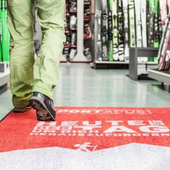
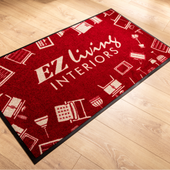
The common assumption is that every entrance should have an identical logo mat. In practice, that rarely makes sense. Traffic levels, weather exposure and how each entrance is actually used all vary, so the right specification usually varies too. You can choose different sizes and materials for each entrance while still maintaining consistent branding with custom logo mats in Ireland across the whole building.
This guide covers why different entrances need different considerations, how to assess each one, which materials suit which locations, how to keep branding consistent throughout, and the common mistakes worth avoiding before you order.
Why Commercial Buildings Often Have Multiple Entrances
Multiple entrances exist because different people need different access, at different times, for different reasons.
- Office buildings often separate staff access from client and visitor reception.
- Hotels need a guest entrance, a staff entrance and sometimes a separate delivery point.
- Retail parks and shopping centres have multiple public entrances plus service access for stock deliveries.
- Schools manage pupil entrances, staff entrances and visitor reception separately.
- Hospitals need public, staff, ambulance and delivery access, often operating around the clock.
- Apartment developments typically have a main entrance alongside secondary or car park access.
- Leisure centres, corporate HQs and business parks often combine public reception with staff-only routes.
Each entrance serves a distinct purpose and carries a different level of foot traffic, which is exactly why a single, one-size specification rarely works well across an entire building.
Should Every Entrance Have the Same Logo Mat?
Not necessarily. Branding should stay consistent across the building, but the mat specification itself doesn't need to be identical at every door.
A busy public entrance and a quiet staff door face completely different demands. Applying the same mat to both means one location is likely under-specified and wearing out fast, while the other is probably paying for more durability than it needs.
Factors worth weighing for each entrance:
- Entrance size, since doorway width and lobby space vary considerably across a building.
- Traffic levels, as public entrances see far more footfall than internal or staff doors.
- Indoor and outdoor locations, which call for different constructions entirely.
- Weather exposure, particularly for entrances facing prevailing wind and rain.
- Cleaning requirements, based on who maintains that entrance and how often.
- Accessibility, including step-free access and wheelchair clearance.
- Door clearance, so the mat doesn't catch or restrict opening.
Matching the specification to each entrance's actual conditions, rather than applying one blanket choice, tends to deliver better performance and a longer working life across the building.
Identify Every Entrance Before Choosing Logo Mats
Before specifying anything, it helps to list every entrance the building actually has. It's easy to overlook one, particularly a side or service door that isn't used daily.
- Main public entrance
- Reception entrance
- Staff entrance
- Visitor entrance
- Accessible entrance
- Side entrance
- Rear entrance
- Delivery entrance
- Service entrance
Each of these should be assessed separately, because grouping them together under one generic specification is how mismatched mats and premature wear tend to happen. A five-minute walk around the building, noting each entrance and how it's used, is time well spent before requesting a quote.
Assess Foot Traffic at Every Entrance
Traffic levels have more influence on the right mat specification than almost any other factor, since they determine how quickly a mat wears and how often it needs cleaning.
Light Foot Traffic
Private offices, meeting room entrances and staff-only doors used by a small, consistent group typically see light traffic. A lighter-duty mat, replaced or laundered less frequently, is usually sufficient here.
Medium Foot Traffic
Retail stores, restaurants, medical clinics and office receptions see a steady flow of visitors throughout the day. These entrances generally need a mid-weight, hardwearing mat that can handle regular use without needing constant attention.
Heavy Foot Traffic
Hotels, shopping centres, schools, hospitals, corporate headquarters and sports facilities experience continuous, high-volume footfall. These entrances need the most durable matting available, along with more frequent inspection, since heavier traffic accelerates wear, increases soiling and shortens the practical lifespan of a mat that's under-specified for the job.
Indoor or Outdoor? Why Placement Changes Everything
Placement changes almost everything about which mat performs well, because indoor and outdoor entrances face entirely different conditions.
Outdoor entrances deal with rain, mud, standing water, wind and UV exposure, sometimes all in the same day. Dust and grit get tracked in constantly, and materials left exposed to sunlight can fade faster than those kept indoors. A fully exposed entrance, with no canopy or porch, faces the toughest conditions of all, while a covered entrance is partially sheltered but still needs a weather-resistant mat.
For entrances that see rain, mud and heavy foot traffic, an outdoor logo mat is generally the right starting point, since it's built to shed water and resist the grit that would break down an indoor-rated product quickly.
Indoor entrances, by contrast, are typically dry and temperature-controlled, which opens up softer, more presentable materials that wouldn't survive outdoor conditions.
Choosing the Right Material for Each Entrance
The right material comes down to where the entrance sits and how it's used, not personal preference.
Washable Logo Mats
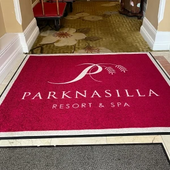
Washable logo mats perform best in warm, dry indoor locations where regular laundering keeps them looking sharp. They suit reception areas, retail stores, corporate offices, and hotel lobbies.
Outdoor Logo Mats
Outdoor logo mats are built for weather resistance, shedding rain and standing up to repeated mud removal without breaking down. They suit entrances facing heavy commercial use and constant exposure.
Coir Logo Mats
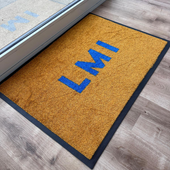
Coir logo mats give a traditional, natural appearance that suits covered entrances, heritage buildings and hotels going for a classic look. They work well in recessed matwells, though they perform best when not left permanently saturated.
No material is universally better. Each one solves a different combination of location, footfall and weather, which is why larger buildings often use more than one type across their entrances.
Should Every Entrance Have the Same Size?
No. Every entrance should be measured individually, because doorway types and lobby space vary considerably across a building.
- Single doors need a mat sized to that doorway, not a generic stock size.
- Double doors need a wider mat, or two mats together, to cover the full walking path.
- Automatic doors need a mat positioned so it doesn't interfere with sensors or the door's swing.
- Sliding doors often suit a wider, shallower mat that spans the full opening.
- Wide entrances, such as shopping centre fronts, may need custom-cut matting.
- Reception lobbies are often sized to the space in front of a desk rather than the door itself.
Getting the size right improves cleaning performance, since dirt is caught before it reaches the floor beyond, and it creates a far better first impression than a mat that's visibly too small or oddly placed.
Maintaining a Consistent Brand Image Across Every Entrance
Consistency comes from controlling the design details centrally, even when mat sizes and materials differ from door to door.
- Consistent logo placement, so the logo sits in the same position and orientation everywhere.
- Corporate colours, matched as closely as manufacturing allows at every entrance.
- Brand guidelines, shared as a single reference so nobody is guessing.
- Logo proportions, kept consistent regardless of the mat's overall size.
- Professional appearance, maintained through the same pile height and edge finish where practical.
- First impressions, reinforced at every entrance a visitor might use, not just the main one.
A visitor entering through a side door should recognise the same brand they'd see at the main entrance. Different mat sizes don't break that consistency, as long as the logo itself stays proportionate and correctly positioned.
Planning Future Replacements
Replacement is rarely a single event across a multi-entrance building. It works better handled in phases.
- Replacing mats in phases spreads cost and disruption rather than requiring every entrance to be redone at once.
- High-traffic entrances wearing faster means they should be replaced on a shorter cycle than quieter doors.
- Regular inspections catch fraying or flattening before it becomes obvious to visitors.
- Keeping spare mats for the busiest entrances avoids gaps between an old mat wearing out and a new one arriving.
- Seasonal maintenance, such as swapping to heavier matting for winter, helps entrances cope with changing conditions.
- Budget planning, based on which entrances wear fastest, avoids unexpected costs landing all at once.
Common Mistakes Businesses Make
⚠️ 1. Identical Blanket Specs
Applying one specification everywhere ignores traffic differences and weather exposure.
⚠️ 2. Ignoring Footfall Variance
Light-duty mats at high-traffic doors wear out fast, causing unplanned replacement costs.
⚠️ 3. Incorrect Sizing Choice
Mats too small look unprofessional and perform poorly, letting dirt track into the building.
⚠️ 4. Outdoor Weather Ignored
Using indoor mats at exposed street doors causes fast breakdown from standing water.
⚠️ 5. Rough Doorway Estimates
Ordering standard sizes without measuring leads to gaps, curling edges or door obstruction.
⚠️ 6. Reactive Replacement
Waiting until mats are worn smooth or curling creates serious slip and trip hazards.
Checklist Before Ordering Logo Mats for Multiple Entrances
- Entrance dimensions for each door
- Indoor or outdoor location
- Traffic level at each entrance
- Door clearance and swing
- Cleaning routine available
- Logo artwork in vector format
- Business branding guidelines
- Delivery requirements
- Installation timing
- Future expansion plans
Working through this checklist before requesting quotes means the first proposal you receive is likely to be accurate, rather than needing revision once missing details come to light.
Frequently Asked Questions
Conclusion
Choosing logo mats for a building with several entrances takes more than picking one standard product and repeating it everywhere. Each entrance has its own traffic level, weather exposure and purpose, and the right specification should reflect that.
Assessing every entrance individually, while keeping branding consistent throughout, improves cleanliness, safety, durability and the overall appearance of the building. If you'd like to get advice on choosing logo mats for multiple entrances, sharing your entrance layouts, measurements and requirements is the best place to start.
Specifying Multiple Commercial Entrances?
Contact Entrance Matting Ireland for tailored advice across main reception, staff doors, accessible ramps, and delivery bays.
Request Multi-Entrance Consultation