
Loose-Laid Logo Mat vs Recessed Matwell: Which Is Better?
If you're fitting out a new entrance or replacing a tired mat, you'll almost certainly face this question: loose-laid logo mat, or recessed matwell? It sounds like a small decision, but it shapes how your entrance looks, how safe it is, and how much work goes into keeping it clean for years to come.
There isn't a single right answer. What works brilliantly for a hotel lobby in Dublin might be wrong for a small retail unit in a rented shopping parade. The right choice depends on entrance design, existing flooring, foot traffic, accessibility, cleaning requirements, and budget.
This guide covers appearance, safety, installation, measuring, cleaning, cost and lifespan, so you can decide based on how your building actually works rather than guesswork. Many Irish businesses browsing custom logo mats in Ireland start here before choosing which system suits their entrance.
Quick Answer: Loose-Laid vs Recessed Matwell
| Factor | Loose-Laid Logo Mat | Recessed Matwell |
|---|---|---|
| Installation | Simple, no building work | Requires an existing or newly built well |
| Appearance | Sits on top of the floor | Flush with the floor surface |
| Accessibility | Slight edge, may need bevelling | Level, no trip lip |
| Trip resistance | Good with proper edging | Excellent, flush finish |
| Cleaning | Lift and clean independently | Cleaned in place, frame needs attention too |
| Replacement | Quick and straightforward | Must match exact matwell dimensions |
| Cost | Generally lower upfront | Depends on construction work involved |
| Typical applications | Retail, offices, rented units | Hotels, schools, hospitals, corporate HQs |
Both systems do their job well when matched to the right environment. The mistake most businesses make isn't choosing the "wrong" type; it's choosing the right type but the wrong size, thickness or material.
What Is a Loose-Laid Logo Mat?
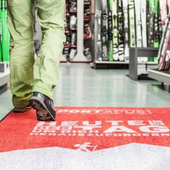
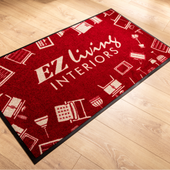
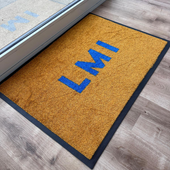
A loose-laid logo mat is a custom-printed entrance mat that sits on top of your existing floor, rather than being sunk into a recess. It's held in place by its own weight and a rubber backing designed to grip the floor surface underneath.
Most loose-laid mats use a durable face material, often nylon, polypropylene or coir, bonded to a rubber base for stability and light cushioning underfoot. With no building work involved, they can be ordered, delivered and put down in a single visit.
Advantages: fast installation, no need to alter the floor, easy replacement when worn, and the flexibility to resize if your layout changes. They also suit leased premises, since nothing structural needs touching.
Limitations: sits slightly proud of the floor, which can create a small lip. On very high-traffic entrances, the edges can curl if the wrong backing is chosen, and heavy trolleys may need bevelled edging to move over the mat smoothly.
Typical uses: retail shops, salons, small clinics and restaurants.
What Is a Recessed Matwell?
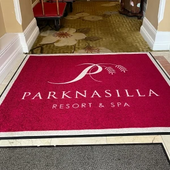
A recessed matwell is a shallow, purpose-built pit set into the floor at the entrance, into which a mat is fitted so its surface sits flush with the surrounding flooring. Rather than resting on top, the mat effectively becomes part of the floor.
Matwells are usually built with a metal or timber frame around the perimeter to protect the surrounding floor finish and give the mat a clean, defined edge. Because the mat sits at the same level as the rest of the floor, there's no lip, no loose edge and no visible transition.
Advantages: genuinely premium, seamless appearance, improved accessibility for wheelchairs and trolleys, and reduced trip risk since nothing sits proud of the floor.
Limitations: mainly structural. You need an existing matwell, or the budget to build one, which usually means involving a builder or shopfitter. Replacement mats must match the exact well dimensions, so accurate measuring matters enormously.
Typical applications: hotels, schools, hospitals and corporate headquarters, where first impressions and accessibility are both priorities.
How Does a Recessed Matwell Work?
A matwell is defined by width, length and depth, plus the tolerance built into the frame. Getting these right is the difference between a mat that sits perfectly flush and one that rocks, gaps at the edges, or sits proud of the floor.
Depth needs to accommodate the mat thickness plus any underlay, while width and length are measured to the inside edge of the frame, not the outside. Many matwells also include a small drainage allowance to cope with water and grit tracked in during wet weather, particularly relevant given how much rain Irish entrances deal with each winter.
Appearance Comparison
Appearance is often the deciding factor for businesses focused on first impressions, and both systems can look excellent when specified properly.
A recessed matwell gives a flush, integrated look that reads as considered and permanent, suiting reception areas, hotel lobbies and corporate entrances.
A loose-laid logo mat, done well, still looks sharp and professional. Retail entrances benefit from the flexibility to change the mat's design or size without touching the floor, suiting seasonal rebranding or shopfront refreshes.
Recessed matwells clearly win in high-end hospitality and prestige office lobbies, where any visible edge undermines the polished finish sought.
Safety and Accessibility
Slip resistance depends far more on the mat's face material and backing than on whether it's recessed or loose-laid, and both can be specified with slip-resistant surfaces suitable for wet Irish conditions.
Trip hazards are where the two systems genuinely differ. A loose-laid mat, if not edged or bevelled properly, can present a small lip that catches shoes, trolley wheels or walking aids. A flush recessed matwell removes this risk almost entirely, since there's no transition for a foot, wheel or cane to catch on.
For premises regularly used by wheelchair users, pushchairs or delivery trolleys, a flush installation makes a genuine practical difference, not just a cosmetic one. This is a key reason schools, hospitals and healthcare facilities lean towards recessed matwells.
Which Option Removes More Dirt and Moisture?
Irish weather brings a relentless combination of rain, mud, leaves and grit through commercial entrances for much of the year. Both systems handle this well, provided they're specified correctly.
What determines how much dirt and moisture a mat removes depends on:
- Mat size, since a longer mat gives more footfall contact to scrape and absorb debris before it reaches the rest of the floor
- Placement, ideally covering the full width of the doorway rather than a narrow strip
- Material, with coir and heavy-duty nylon performing differently in wet versus dry conditions
- Maintenance, since even the best mat stops working once it's saturated or clogged with grit
A recessed matwell with poor drainage can hold moisture against the floor if not maintained, while a well-placed loose-laid mat with the right backing can outperform an undersized matwell. Installation method is one factor among several, not the deciding one.
Installation Requirements
Installing a Loose-Laid Logo Mat
Installation is genuinely simple. The mat is manufactured to the required size, delivered, and laid directly onto the existing floor, with no building work and no disruption to trading hours. Replacement follows the same process, making loose-laid mats practical for businesses that need minimal downtime.
Installing a Recessed Matwell
If a matwell already exists, fitting a new mat is straightforward, provided the replacement matches the correct dimensions. If no matwell exists, building one involves cutting into the floor structure, fitting a frame, and finishing the surrounding flooring to meet it neatly. This is typically only practical during new construction or a wider refurbishment, usually requiring a builder or shopfitter working alongside whoever supplies the mat.
How to Measure a Recessed Matwell
Accurate measuring is the single most important step in getting a recessed matwell right, and it's where most ordering mistakes happen.
- Measure width and length at multiple points, since older matwells are rarely perfectly square
- Measure depth at each corner, not just the centre, as wells settle unevenly over time
- Note the frame type and whether the mat sits under, over or flush with the frame lip
- Check door clearance, particularly with inward-opening doors
- Record any obstructions such as thresholds or floor-mounted door stops within the well
Common mistakes include measuring only once, measuring the outside of the frame rather than the inside, and forgetting depth allowances for underlay. Any of these can leave a mat that doesn't fit properly.
Who Chooses Which System?
Businesses Choosing Loose-Laid Logo Mats
Retail shops, small offices, salons, clinics, restaurants, temporary premises and rental buildings tend to favour loose-laid mats. No building alterations are needed, landlords are more willing to approve them, and mats can be replaced or resized quickly if the business relocates. For shorter leases, this flexibility often outweighs the flush finish a matwell would offer.
Businesses Choosing Recessed Matwells
Hotels, schools, hospitals, corporate headquarters, shopping centres and large office buildings tend to favour recessed matwells. These environments usually involve new construction or major refurbishment, where building a matwell into the plans is straightforward, and they carry higher accessibility requirements that benefit from a flush, trip-free entrance.
Cleaning, Lifespan & Cost Comparisons
Cleaning and Maintenance
Loose-laid mats can be lifted entirely for cleaning, whether vacuuming, hosing down outdoors, or a deep wash, then simply laid back down. This makes deep cleaning genuinely easier. Recessed mats are typically vacuumed and cleaned in place, since lifting them regularly is less practical. The surrounding frame also needs occasional attention, as grit and moisture can collect along its edges.
Lifespan Comparison
Lifespan is influenced far more by traffic levels, cleaning frequency, weather exposure and material quality than by whether a mat is loose-laid or recessed. Recessed mats are somewhat protected from edge wear since the frame holds them in place, while loose-laid mats depend more on backing quality.
Cost Comparison
Costs vary depending on mat size, material, design complexity and, for matwells, whether building work is required. A loose-laid mat generally involves a simpler purchase and installation process. A recessed matwell mat may cost more once you factor in building work to create or repair the well, though if a well already exists, ongoing replacement costs are broadly comparable.
Common Mistakes Businesses Make
⚠️ 1. Undersized Mats
Choosing a mat too small for the entrance width or footfall pattern.
⚠️ 2. Ignoring Door Clearance
Resulting in a mat that catches on the door sweep or bottom edge.
⚠️ 3. Single Measurement Point
Taking rough measurements instead of measuring multiple points across the well.
⚠️ 4. Wrong Depth Allowance
Selecting the wrong thickness for the matwell depth.
⚠️ 5. Price Over Material
Buying purely on price without considering material suitability for traffic.
⚠️ 6. Underestimating Footfall
Underestimating traffic levels, causing the mat to wear out prematurely.
⚠️ 7. Appearance Over Practicality
Prioritising appearance over practicality in high-traffic, wet entrances.
Which Option Is Better for Different Businesses?
| Business Type | Better Suited To | Why |
|---|---|---|
| Small office | Loose-laid | Simple, flexible, minimal disruption |
| Retail shop | Loose-laid | Easy to resize or replace during refits |
| Hotel | Recessed matwell | Flush, premium first impression |
| School | Recessed matwell | Accessibility and trip safety |
| Healthcare | Recessed matwell | Trolleys, wheelchairs, flush access |
| Restaurant | Either | Depends on existing floor and layout |
| Shopping centre | Recessed matwell | High traffic, accessibility standards |
| Industrial premises | Loose-laid | Practical, easy to replace when worn |
| Corporate office | Recessed matwell | Polished entrance, brand presentation |
These are general patterns rather than fixed rules. A restaurant with an existing matwell should use it, while a corporate office without one may find loose-laid practical until a refurbishment allows for a proper recess.
Which Option Is Better for Existing Buildings?
Older and historic buildings often present unique constraints. Cutting into original flooring to create a matwell isn't always possible, particularly where protected floor finishes are involved, making loose-laid mats the more realistic choice.
Rental premises almost always favour loose-laid mats, since altering the floor structure typically requires landlord consent that many tenants won't pursue.
New construction is the ideal point to plan a matwell, since it can be built into the design from the start. Refurbishments sit in between: if the floor is already being opened up, adding a matwell then is often the most cost-effective moment to do it.
Frequently Asked Questions
Conclusion
There's no universally better choice between a loose-laid logo mat and a recessed matwell. The right decision depends on your building layout, entrance traffic, whether a matwell already exists, accessibility requirements, how your premises are cleaned, and your budget.
Loose-laid mats offer flexibility, quick installation and easy replacement, making them a practical fit for rented premises, retail units and smaller offices. Recessed matwells offer a flush, premium finish and improved accessibility, suiting hotels, schools, healthcare settings and corporate buildings, particularly where a matwell already exists or is planned as part of new construction.
Find the Right Entrance Mat System
Contact Entrance Matting Ireland for expert guidance on measuring recessed matwells or selecting high-grip loose-laid logo mats.
Explore Logo Mat Solutions