Washable, Coir or Rubber Logo Mats: Which Material Should You Choose?

There's no single best logo mat material for every entrance in Ireland. When it comes to washable vs coir vs rubber logo mats, the right answer depends on where the mat sits, how exposed it is to weather, the level of foot traffic it faces, and how it will be cleaned day to day. Washable mats generally suit indoor business entrances, coir may suit recessed or covered thresholds, and rubber may suit outdoor, wet or demanding areas.
This article compares the three materials across placement, dirt and moisture control, cleaning, foot traffic, thickness, artwork and custom sizing. We'll also look at appearance and long-term suitability, so you can match the material to your actual entrance rather than choosing on looks alone, and understand why product specification matters just as much as the material itself.
Quick Comparison of Washable, Coir and Rubber Logo Mats
| Factor | Washable textile mat | Coir mat | Rubber mat |
|---|---|---|---|
| Typical placement | Indoor entrances, lobbies | Covered or recessed thresholds | Outdoor or wet/greasy areas |
| Main purpose | Moisture absorption, fine dirt control | Dry dirt and debris scraping | Scraping plus moisture resistance |
| Moisture handling | Absorbs into pile | Limited; not for prolonged saturation | Generally resistant, depending on product |
| Dirt scraping | Moderate, fine particles | Strong, coarse texture | Strong, textured surface |
| Logo appearance | Detailed, multicoloured options | Textured, natural look | Bold, high-contrast designs |
| Cleaning method | Vacuum, machine wash where permitted | Vacuum, shake, dry removal | Sweep, hose or scrub where permitted |
| Thickness | Varies by product | Commonly thicker | Often lower profile options available |
| Traffic suitability | Depends on traffic rating | Depends on construction and use | Depends on specification |
| Matwell suitability | Sometimes | Often designed for matwells | Depends on product |
| General appearance | Professional, colourful | Traditional, natural fibre | Practical, commercial |
This table provides general guidance. The correct material still depends on the exact product, entrance conditions, traffic level and cleaning routine.
What Is a Washable Logo Mat?
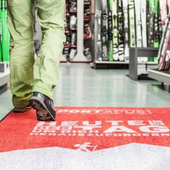
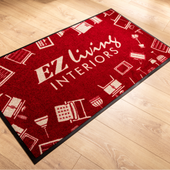
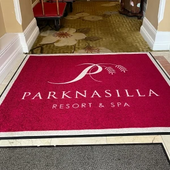
Washable logo mats generally use a textile or nylon pile bonded to a rubber backing, with branding printed or dyed into the surface. Built for indoor commercial use, the pile absorbs moisture from wet shoes and traps fine dirt before it reaches the floor. A washable logo mat is a typical example, with logo colours reproduced across the pile.
These mats aren't all built the same way, so traffic rating, pile density, thickness and washing instructions differ between products. Some are designed for machine washing and tumble drying, others have different care requirements. Confirm these details before ordering.
Where Washable Logo Mats Usually Work Best
Washable mats are commonly seen in offices, shops, hotels, clinics, salons, restaurants and schools. They suit locations where the main priorities are moisture absorption, clear branding and a professional indoor appearance.
Main Advantages of Washable Logo Mats
Washable mats often allow for detailed artwork and strong colour reproduction, since the pile can hold dye or print well. They generally offer decent indoor moisture control and come in different traffic grades and custom sizes.
Main Limitations of Washable Logo Mats
Many washable mats aren't designed for fully exposed outdoor use, and lighter-traffic products may struggle in busy entrances. Textile surfaces don't always cope well with grease or oil. Door clearance still needs measuring, and backing type and traffic rating should be confirmed against your actual foot traffic.
What Is a Coir Logo Mat?
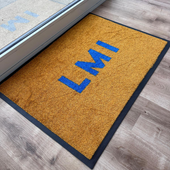
Coir logo mats are made from natural coconut fibre, giving them a coarse, scraping surface and a traditional appearance suited to period or heritage-style entrances. They're commonly used in matwells, where the mat sits flush with the floor. A customised coir logo mat can be made to custom sizes, and Logo Mats Ireland's coir option is generally available in approximately 17mm or 23mm thickness, depending on the product.
Coir maintenance differs from textile or rubber options, and logo reproduction on the coarser fibre looks more textured. Accurate matwell measurements matter, since coir mats are often fitted to size.
Where Coir Logo Mats Usually Work Best
Coir tends to suit covered entrances, recessed matwells, hotels, restaurants and traditional buildings. It generally works best when protected from prolonged heavy rain.
Main Advantages of Coir Logo Mats
Coir offers strong dry dirt scraping thanks to its coarse texture, along with a natural, traditional appearance that fits older buildings well. It's available in custom sizes and suits matwell installations.
Main Limitations of Coir Logo Mats
Coir may require greater door clearance, so matwell depth must be measured before ordering. Natural fibres can shed over time, and prolonged saturation may not suit every product. Coir isn't normally machine washed, so its maintenance routine differs from textile and rubber mats.
What Is a Rubber Logo Mat?
Rubber logo mats are built from rubber, generally with a textured scraping surface designed to cope with moisture. This suits outdoor use as well as wet or greasy indoor environments, including industrial and commercial settings. A rubber logo mat is described as resistant to chemicals, grease and oil, though this should be confirmed for other rubber products rather than assumed.
Where Rubber Logo Mats Usually Work Best
Rubber mats are commonly used at outdoor entrances, restaurants, commercial kitchens, workshops and industrial premises, and anywhere wet or greasy conditions are a regular feature.
Main Advantages of Rubber Logo Mats
Rubber generally offers moisture resistance and strong scraping action, along with straightforward surface cleaning. Grease or oil resistance, where specified, adds to its suitability for demanding areas.
Main Limitations of Rubber Logo Mats
Rubber mats can look more functional than textile options and don't offer the same softness underfoot. Moisture absorption may be lower than a textile pile, since rubber tends to move water rather than soak it up. Fine artwork depends on the production method, so rubber may not suit every premium reception area.
Washable vs Coir vs Rubber Logo Mats: Detailed Comparison
Indoor and Outdoor Suitability
Washable mats generally suit indoor or protected areas, shielded from rain and sun. Coir suits covered and recessed entrances, where some exposure is fine but standing water isn't ideal. Rubber suits exposed environments, including mud, temperature changes or grease.
Dirt and Moisture Control
Textile pile absorbs moisture and collects fine dirt, useful where shoes are damp rather than muddy. Coir scrapes away dry dirt and larger debris. Rubber scrapes dirt while coping with wet conditions. The best material depends on your main entrance issue.
Foot-Traffic Suitability
Traffic suitability depends on construction rather than the material alone. A quiet office, a busy shop and an industrial entrance all place different demands on a mat. Check the traffic rating, pile density, backing type and whether trolleys or luggage regularly cross it.
Cleaning and Maintenance
Washable mats are commonly vacuumed, with machine washing and tumble drying available where permitted. Coir mats are typically vacuumed or shaken, with occasional cleaning underneath. Rubber mats are generally swept, sometimes hosed or scrubbed. These aren't universal instructions, so check the care guidance for what you order.
Logo Detail and Colour Reproduction
Textile mats often suit detailed, multicoloured logos thanks to the dye or print process. Coir creates a more textured, natural result. Rubber often suits bold, high-contrast designs better than fine lettering. A design proof is worth reviewing before approval.
Thickness and Door Clearance
Washable mats come in a range of profiles, coir is commonly thicker, and rubber sometimes offers lower-profile options. Door swing and matwell depth need measuring against the finished thickness. The thickest option isn't automatically the best.
Appearance and Brand Style
Washable textile mats tend to look colourful and professional, coir has a natural, traditional feel, and rubber reads as practical and commercial. Appearance matters, but shouldn't override suitability.
Cost and Long-Term Value
We won't invent prices, since cost depends on material, size, thickness, traffic rating, artwork, quantity, VAT and delivery. Long-term value comes from choosing a material genuinely suited to your entrance, not the cheapest option on paper.
Which Material May Suit Different Business Entrances?
| Business or entrance | Material worth considering | Main factor to assess |
|---|---|---|
| Small indoor office | Washable | Indoor moisture and light-to-moderate traffic |
| Retail shop | Washable or rubber | Traffic level and cleaning routine |
| Hotel reception | Washable or coir | Appearance alongside moisture control |
| Restaurant | Rubber or washable | Grease exposure near kitchen entrances |
| Pub | Rubber | Spills and wet-weather footfall |
| School | Washable or rubber | High traffic and easy cleaning |
| Gym | Rubber | Moisture, sweat and heavy footfall |
| Healthcare clinic | Washable | Hygiene and fine dirt control |
| Outdoor café | Rubber | Weather exposure |
| Industrial premises | Rubber | Grease, oil and heavy traffic |
| Recessed matwell | Coir or washable | Matwell depth and moisture level |
| Traditional building | Coir | Appearance and covered threshold |
These are general starting points. Businesses in the same industry may need different materials, since entrances, traffic and weather exposure vary.
When One Mat May Not Be Enough
Some entrances benefit from a two-stage system rather than a single mat. A rubber mat placed outside, followed by a washable mat just inside the door, is one common approach. Another option pairs coir at a protected threshold with a textile mat further inside. The idea is straightforward: the first mat removes larger debris and surface moisture, while the second collects any remaining moisture and fine dirt before it reaches the main floor. Not every entrance needs two mats, but it's worth considering where footfall is heavy or weather exposure is significant.
Questions to Ask Before Choosing a Logo Mat Material
- Will the mat be indoors or outdoors?
- Is the entrance covered?
- Will rain reach the mat directly?
- Is mud, grease or oil present at the entrance?
- How many people use the entrance daily?
- Does the door open over the mat?
- Is there a recessed matwell to fill?
- How will the mat be cleaned, and how often?
- How detailed is the logo you want to display?
- Is custom sizing or shaping needed?
- Will luggage, trolleys or wheeled equipment cross the mat?
- What's included in the final quotation?
Common Mistakes When Comparing Logo Mat Materials
Choosing by Appearance Alone
It's tempting to pick a material because it looks the part, but entrance conditions should come first.
Using an Indoor Mat in a Fully Exposed Location
Indoor-focused constructions aren't generally designed for constant rain or direct sun.
Assuming Rubber Is Only for Industrial Areas
Rubber mats also suit restaurants, gyms and other wet entrances, not just workshops or factories.
Assuming Coir Suits Every Entrance
Coir works well in many settings, but moisture exposure, thickness and matwell requirements need checking first.
Treating Every Washable Mat as Identical
Traffic rating, pile density, backing and washing instructions all vary, so two similar-looking mats can perform quite differently.
Ignoring Door Clearance
Finished mat thickness affects whether a door will clear it properly, and it's easy to overlook until installation day.
Choosing Only by Price
Price matters, but suitability, cleaning and long-term maintenance also affect overall value.
Frequently Asked Questions
Are washable logo mats suitable for outdoor use?
Many are built for indoor use rather than full outdoor exposure. Some may tolerate sheltered spots, depending on construction. Confirm outdoor suitability with the specific product before ordering.
Are coir logo mats waterproof?
Coir mats aren't waterproof, and prolonged saturation may not suit every product. They cope well with everyday moisture and dry dirt in covered entrances. For constant rain, rubber may suit better.
Are rubber logo mats suitable for indoor entrances?
Yes, rubber can suit indoor entrances, particularly where grease, oil or heavy moisture are present, such as kitchens or gyms. The right choice still depends on the product and desired appearance.
Which logo mat material is easiest to clean?
This depends on the entrance rather than one material being universally easiest. Rubber often allows straightforward surface cleaning, coir is typically vacuumed or shaken, and washable mats may permit machine washing.
Which material shows a detailed logo most clearly?
Washable textile mats often reproduce detailed, multicoloured artwork clearly. Coir gives a more textured result, while rubber suits bolder, simpler designs. Fine lettering may need adjusting depending on the material.
Which logo mat is best for Irish weather?
No single material is automatically best, since conditions vary by entrance. Rubber often copes with rain and mud in exposed spots, coir suits covered thresholds, and washable mats generally work indoors.
Is coir suitable for a recessed matwell?
Coir is commonly used in recessed matwells, and custom sizing can help it fit flush with the floor. Matwell depth and mat thickness still need measuring to avoid an awkward fit.
Should I use one mat outside and another inside?
A two-stage approach can suit entrances with heavy footfall, using an outdoor mat for larger debris and an indoor mat for remaining moisture and dirt. Not every entrance needs this.
Choosing the Right Logo Mat Material for Your Entrance
There's no material that works best for every business, and the comparison of washable, coir and rubber logo mats really comes down to your specific entrance. Washable textile mats often suit indoor entrances where moisture absorption and clear branding matter most. Coir may suit protected and recessed entrances with a more traditional feel, while rubber may suit wet, outdoor or demanding areas where durability against grease or moisture is a priority.
Whatever you're considering, base the decision on placement, traffic and maintenance rather than appearance alone, and always check door clearance and matwell depth before ordering. Think about how detailed your artwork needs to be, since this can affect which material reproduces it best. No single material is automatically the right answer for every business, so it's worth weighing these factors against your own entrance before deciding.